I recently signed up to review the book Strangers at My Door by Jonathan Wilson-Hartgrove. In it he tells of the failures, successes, and surprises of treating everyone who comes to the door at their house as if the person was Jesus. This is an ancient practice, outlined by St. Benedict in his monastic rule over 1500 years ago (and was likely around before that, but the Benedictines have kept the practice alive).
Tonight I had the opportunity to practice treating the strangers in my yard like Jesus. This is where people interact with me more. My youngest and I were out in the yard throwing around a football tonight. First, a woman approached the fence. She said she had been walking through the neighborhood trying to find some work...her check hadn't come today and she had a young one at home to feed.
In our part of the world, there are a lot of people out there asking for food and money. On weekends I can see several people on street corners in a short drive. Sometimes we keep food in the car to give them; sometimes I turn a blind eye.
It was easier to help the woman tonight. She wasn't asking for money or a hand out. She was asking if she could do some cleaning or some other work for us and afterward we'd take her to the grocery store for food. We're low on food in the house, but we put together a bag of somethings to hopefully help her and her family. She was grateful at least.
A little while later an older man came along and was commenting on how nice it was to see my son and I playing catch. He was encouraging Nils to keep getting better. Apparently he had seen him rollerblading and playing street hockey with Beth a few weeks ago. He was encouraging and appreciative that we were spending time together as a father and son.
Even from a few yards away, I could smell the alcohol on his breath. It would have been easy to dismiss him as just some drunk. And if he had been surly, or cursing, or loud, I probably would have. But it was easy to engage him and be respectful in hearing what he wanted to say.
Not long afterward our neighbor from down the block brought her dog up to play catch in the yard with the boys.
I am not always good at engaging the person walking by my yard. Sometimes I'm caught up in gardening or yard work. Sometimes I don't want to acknowledge them. Sometimes they don't want to be acknowledged. I've had my share of really bad experiences with people on the other side of the fence, too. But I'm finding that I need to see the other and treat them as Jesus as best I can. Tonight was rewarding in ways that I wouldn't have been looking for.
Showing posts with label St. Benedict. Show all posts
Showing posts with label St. Benedict. Show all posts
6/05/2014


5/26/2014
Work

We spent the weekend, like usual, at Covenant Pines Bible Camp. Over Memorial Day weekend they have a Work & Worship camp where families and individuals go and help get the camp ready for summer while having a lot of fun. While many churches go from the Twin Cities area, our church kind of makes it our church retreat.
I had attended a similar camp with my family growing up in Iowa. It was a good memory for me. So before we even attended our church, we were going to Work & Worship. It's where we met our church, actually.
The Benedictine monks use the phrase "ora et labora" to describe their calling. It's how our church refers to the weekend. It means to pray and to work. Work and worship.
Our pastoral associate spoke on Sunday morning at camp. She used Psalm 127 as her text.
Unless the Lord builds the house, / the builders labor in vain.
Unless the Lord watches over the city, / the guards stand watch in vain.In vain you rise early / and stay up late,
toiling for food to eat—/ for he grants sleep to those he loves.Children are a heritage from the Lord, / offspring a reward from him.Like arrows in the hands of a warrior / are children born in one’s youth.Blessed is the man / whose quiver is full of them.
They will not be put to shame / when they contend with their opponents in court.
She reminded us that God is at work. No matter where we're at. Whether we're working at a Bible Camp or at a gas station. If we're not working alongside God, that work doesn't matter.
Then the Psalm switches to talking about children. An odd transition. Maybe. I wonder if it's not getting at the importance of viewing our parenting as worthwhile work. That if we see where God is at work in our children's lives and join in, we will find rich blessings.
 (Now, I know the church unfortunately often elevates marriage and families and disregards singleness which Paul lauds as the higher calling, but I don't think this Psalm intends to diminish being single. I think the children thing is just an example. Possibly. Maybe it's not even related. But no matter what your relational status, God wants to you to rely fully upon Him and not your own efforts.)
My oldest son wanted to paint this weekend at camp. So we found a job painting. It turned out to be inside, instead of out--which was maybe okay since it turned out to be really hot, and we probably would have ended up with bad sunburns. He took a few breaks, but worked alongside me most of the day. My younger son joined for a short time, too.
 For some reason I can't always get them to work with me at home. But at camp they're much more willing. It was good to get to talk with them as we worked. It wasn't necessarily deep conversation, but it was getting to know them more. In the afternoon, the oldest and I went out in the woods behind the building we were painting and took a peanut break--just sitting and eating some peanuts together.
On Sunday there was a lot of free time. Both the boys wanted to try a new activity called "crate stacking." You simply stack milk crates as high as you can while standing on top of them. I was proud of my oldest for wanting to try it. He doesn't often want to try new things--especially activities with a potential for failure. But he did it and did great.
One of the hard parts of parenting is that you never know how your kids will turn out. No matter how much you invest in them, they're still independent souls who will make their own decisions one day. They might not always be the right decisions, either.
We can only trust that by investing in where God is at work in our children that He will build the house.
9/07/2013
Yard Parties and Hospitality
Last night we hosted a gathering of other families from school. We grilled out and hung out in the yard while children played. We posted an invitation on the school's parent forum Facebook page. We didn't know how many people would show up. It was only about 7 families. Which wasn't overwhelming and was a nice size for getting to talk.
Sometimes the thought of having a group of people over can be overwhelming. I wish we were at a point where we financially could afford to offer everyone's meat and drinks and just have them show up, but we're not. And that didn't stop us.
We said we'd have a grill ready along with paper plates, eating utensils, and water. People were asked to bring their own protein to grill, a dish to share, extra beverages they may like, and a lawn chair (we had about a half dozen chairs outside, a picnic table, and a picnic blanket). Really we just provided space and time.
Hospitality doesn't have to be audacious or lavish--at least, I don't think it does. Hospitality can be simple. It should, either way, be focused on the guest.
St. Benedict wrote, "Let all guests who arrive be received like Christ" (RB 53).
That's a high calling--not an easy thing to do. I honestly don't often think about that most of the time. I know I didn't last night. I spent my time turning the hot dogs, chicken, and one piece of steak. I was getting food on the table and cups by the water cooler. I grabbed the extra lawn chairs out of the back of our car. At some point I sat and ate and got to talk with people. Most of the time I felt more like Martha than Mary.
But I think--I hope--that even creating space and time for people to come together is a step toward receiving the other as Christ. And let me be clear--it was not a religious gathering in anyway. We knew a few families as having church connections, and we may have talked a little about church, but it was just a gathering of families connected by school. Many knew each other--at least in passing, but some hadn't met before. And that was good. People came together. Relationships were built. These are good things, I believe.
Sometimes the thought of having a group of people over can be overwhelming. I wish we were at a point where we financially could afford to offer everyone's meat and drinks and just have them show up, but we're not. And that didn't stop us.
We said we'd have a grill ready along with paper plates, eating utensils, and water. People were asked to bring their own protein to grill, a dish to share, extra beverages they may like, and a lawn chair (we had about a half dozen chairs outside, a picnic table, and a picnic blanket). Really we just provided space and time.
Hospitality doesn't have to be audacious or lavish--at least, I don't think it does. Hospitality can be simple. It should, either way, be focused on the guest.
St. Benedict wrote, "Let all guests who arrive be received like Christ" (RB 53).
That's a high calling--not an easy thing to do. I honestly don't often think about that most of the time. I know I didn't last night. I spent my time turning the hot dogs, chicken, and one piece of steak. I was getting food on the table and cups by the water cooler. I grabbed the extra lawn chairs out of the back of our car. At some point I sat and ate and got to talk with people. Most of the time I felt more like Martha than Mary.
But I think--I hope--that even creating space and time for people to come together is a step toward receiving the other as Christ. And let me be clear--it was not a religious gathering in anyway. We knew a few families as having church connections, and we may have talked a little about church, but it was just a gathering of families connected by school. Many knew each other--at least in passing, but some hadn't met before. And that was good. People came together. Relationships were built. These are good things, I believe.
7/20/2013
Work
In less than a month I'll be back working at school. I'm trying not to think about that yet. Of course, I'm still working--I'm just not getting paid for it. Some days I love my job, some days I can't wait to get home (unless I'm working at home--then I can't wait to get a bike ride or a swim in a lake or some other opportunity to get away).
 I was at a team meeting at church this morning. Our pastoral associate brought up work: noticing the stress people carry from their jobs, the time consuming hours, the struggle with work and faith. It's the same for most of us. We put in our time, to make money, to have the American Dream. Only it causes more stress than a dream-fulfilled life.
In my book (here's a little taste of things for those who haven't read it yet) I address how one of the cultural traps we fall into is looking at our job as a career. Then we're stuck. We're only able to try and get ahead and make more money. We're defined by what we do.
Instead, I propose we use the language of "vocation." It comes from the Latin for "calling." What if we look at our work as a place God calls us to, to serve Him? (And maybe we need to look to our spiritual community for more discernment in where God has called us at times.) We tend to think of calling only for those in full-time ministry, but I believe God has called us all (you're going to have to read my book for more about what that means).
Vocation means we work for God, not just a boss. It means we are there to serve and look for areas where the Kingdom of God is at hand. It means God is present with us at all times and we can learn to practice His presence. The monastic community knows about this. Even though they are called to ministry, most of them spend their time teaching, washing dishes, farming, etc. But wherever they are working, they see it as an opportunity to serve and love. They also know how to play and enjoy life (which we seldom picture them as doing, but it's part of why they can work so well).
The other aspect that I think most of us miss out on is God's commandment of Sabbath. Often we think of honoring the Sabbath as simply attending church. That may be part of it (but not necessarily--when I was in ministry, church was work and my Sabbath took place on another day of the week), but it is more about the rhythms of our life. We work and we rest. That's how God designed it.
We take one day where we trust God with our checkbook and don't make any income. It's easy to be legalistic about the Sabbath, but I try to do as little work as possible. When we've Sabbathed well, we've even made our meals the day before so we don't have to spend time working in the kitchen. I sometimes need a restful, playful time with my family; I sometimes need a little quiet time for myself. Sabbath will probably look different for each person, but I believe it is a need in our life rhythms.
I confess that I haven't done either of those things well lately. I've been working for years on practicing the presence of God wherever I'm working. I'm still not very disciplined at it. But the days I invite God into my job and seek to serve Him and others tend to be the more enjoyable days.
We haven't developed good Sabbath rhythms well yet, either. After our move to Minnesota, Beth worked irregular hours, so we never had one set day. I would try and do Sunday, but it's not easy when it's only part of your family doing it. And now that we need to bring food to church for supper, we're often doing some work on Sunday afternoons. We do take time to rest and enjoy time together; we just haven't done well at creating the rhythms for it that we need to work well.
Those are my intentions, however. And I fully believe that they help us shift our mindset about work and make life more abundant. But, again, be sure to check out my book, and leave some comments on your experience with work, faith, life, and the balance of it all.
I was at a team meeting at church this morning. Our pastoral associate brought up work: noticing the stress people carry from their jobs, the time consuming hours, the struggle with work and faith. It's the same for most of us. We put in our time, to make money, to have the American Dream. Only it causes more stress than a dream-fulfilled life.In my book (here's a little taste of things for those who haven't read it yet) I address how one of the cultural traps we fall into is looking at our job as a career. Then we're stuck. We're only able to try and get ahead and make more money. We're defined by what we do.
Instead, I propose we use the language of "vocation." It comes from the Latin for "calling." What if we look at our work as a place God calls us to, to serve Him? (And maybe we need to look to our spiritual community for more discernment in where God has called us at times.) We tend to think of calling only for those in full-time ministry, but I believe God has called us all (you're going to have to read my book for more about what that means).
Vocation means we work for God, not just a boss. It means we are there to serve and look for areas where the Kingdom of God is at hand. It means God is present with us at all times and we can learn to practice His presence. The monastic community knows about this. Even though they are called to ministry, most of them spend their time teaching, washing dishes, farming, etc. But wherever they are working, they see it as an opportunity to serve and love. They also know how to play and enjoy life (which we seldom picture them as doing, but it's part of why they can work so well).
The other aspect that I think most of us miss out on is God's commandment of Sabbath. Often we think of honoring the Sabbath as simply attending church. That may be part of it (but not necessarily--when I was in ministry, church was work and my Sabbath took place on another day of the week), but it is more about the rhythms of our life. We work and we rest. That's how God designed it.
We take one day where we trust God with our checkbook and don't make any income. It's easy to be legalistic about the Sabbath, but I try to do as little work as possible. When we've Sabbathed well, we've even made our meals the day before so we don't have to spend time working in the kitchen. I sometimes need a restful, playful time with my family; I sometimes need a little quiet time for myself. Sabbath will probably look different for each person, but I believe it is a need in our life rhythms.
I confess that I haven't done either of those things well lately. I've been working for years on practicing the presence of God wherever I'm working. I'm still not very disciplined at it. But the days I invite God into my job and seek to serve Him and others tend to be the more enjoyable days.
We haven't developed good Sabbath rhythms well yet, either. After our move to Minnesota, Beth worked irregular hours, so we never had one set day. I would try and do Sunday, but it's not easy when it's only part of your family doing it. And now that we need to bring food to church for supper, we're often doing some work on Sunday afternoons. We do take time to rest and enjoy time together; we just haven't done well at creating the rhythms for it that we need to work well.
Those are my intentions, however. And I fully believe that they help us shift our mindset about work and make life more abundant. But, again, be sure to check out my book, and leave some comments on your experience with work, faith, life, and the balance of it all.
3/11/2013
Reading and Lent
I've been reading a book (which I'll talk about more in a later post) during Lent that is a series of talks given by Basil Pennington who was the abbot of the Cistercian monastery, Our Lady of the Holy Spirit in Georgia. His talks focused around the Rule of Benedict, which I've gotten to know in the last few years. Many monastics use it as a guide for their communal life. And it is just a guide. Benedict himself acknowledges that monasteries will need to adapt and disregard some of it as needed. Therein lies the genius: knowing that it shouldn't be overly-rigid.
Our church uses the Rule of Benedict as a guide for living together. Clearly, much of it needs to be adapted as we aren't monastics living under the same roof. But the principles are helpful. Like children learning from adults and vice versa. Like practicing hospitality. Like being obedient and seeking peace. Like valuing work and prayer.
One of the things I like about Benedict's rule is the sense of rhythm and his adjustment for the seasons. Like in the winter monks are permitted an earlier bed time since it gets dark earlier. And during holy days, the rhythm of the monastery changes. In chapter 48 Benedict says:
As a bibliophile I love the decree that there should be some focused reading time during Lent. I also chuckle at the suggestion to have to senior monks checking to make sure everyone is using that time wisely. Benedict's principle here, though, is that Lent is a time for inward reflection and growth.
Basil Pennington writes in his book Listen with Your Heart that "The meaning of Lent is a time when we really stop and ask ourselves, What is the meaning of it all? Who am I? What are we called to? It is a time to ask the deep questions and come to know the joy of life's meaningfulness."
It's a good quest to stop and ask those questions. Like much of the year, Lent tends to be full, so without intent I don't take the time to quiet myself and reflect (so I'm writing this post to help me make that time and think about those questions).
What questions are on your heart this Lenten season?
Our church uses the Rule of Benedict as a guide for living together. Clearly, much of it needs to be adapted as we aren't monastics living under the same roof. But the principles are helpful. Like children learning from adults and vice versa. Like practicing hospitality. Like being obedient and seeking peace. Like valuing work and prayer.
One of the things I like about Benedict's rule is the sense of rhythm and his adjustment for the seasons. Like in the winter monks are permitted an earlier bed time since it gets dark earlier. And during holy days, the rhythm of the monastery changes. In chapter 48 Benedict says:
During the days of Lent, they should be free in the morning to read until the third hour, after which they will work at their assigned tasks until the end of the tenth hour. During this time of Lent each one is to receive a book from the library, and is to read the whole of it straight through. These books are to be distributed at the beginning of Lent. Above all, one or two seniors must surely be deputed to make the rounds of the monastery while the brothers are reading. Their duty is to see that no brother is so apathetic as to waste time or engage in idle talk to the neglect of his reading, and so not only harm himself but also distract others. (RB 48:14-18)
As a bibliophile I love the decree that there should be some focused reading time during Lent. I also chuckle at the suggestion to have to senior monks checking to make sure everyone is using that time wisely. Benedict's principle here, though, is that Lent is a time for inward reflection and growth.
* * * * * * *
Basil Pennington writes in his book Listen with Your Heart that "The meaning of Lent is a time when we really stop and ask ourselves, What is the meaning of it all? Who am I? What are we called to? It is a time to ask the deep questions and come to know the joy of life's meaningfulness."
It's a good quest to stop and ask those questions. Like much of the year, Lent tends to be full, so without intent I don't take the time to quiet myself and reflect (so I'm writing this post to help me make that time and think about those questions).
What questions are on your heart this Lenten season?
2/16/2013
What I Learned from Praying with the Monks
This weekend is my third visit to a monastery. We are here for our men's retreat from church. We gather together in their guest house on our own, leading our own discussions, gathering in prayer, etc. But we also walk over to the Abbey Church and join the monks for their daily prayers: 7 am, 11:30am, 5pm, and 7pm. We don't have to; it's optional. But I've come to appreciate the richness and depth of time with God available in those monastic gatherings.
It is an unusual place for an Evangelical to be found. We tend to shy away from the Catholic traditions. Often we've been taught that they just aren't "Christian." They're almost cult-like or heretical at best. But I've found that most of the traditions are almost as old as Christ Himself (at least the incarnational Christ). Some of the practices date back to ancient Judaism which birthed the Christian church. There are plenty of things that the larger Protestant church as a whole needs to reclaim that we missed out on when we separated ourselves from the first 1600 years of Christian history.
A monastery is an unusual place for most Evangelicals to go it seems. But I am enriched by my time here. As we joined in prayer times with the monks I became aware of the things I was learning from them:
 Reverence for Christ. As we enter the choir stalls, as we leave the choir stalls, whenever we pray the Gloria Patri, anytime you sing a verse that praises the Trinity you bow. Anytime a monk approaches the altar, they bow. Of course, some people just do it because they're supposed to. But if you keep before you the Lordship of Christ, the act of bowing is a humbling, worshipful act of acknowledgment of who Jesus is.
The Centrality of the Cross. For whose who follow Jesus, the cross was a turning point in history. It changed everything. I don't know if I'll ever understand churches that avoid using symbols of the cross in worship spaces. When the monks gather to pray, the cross is at the center (hanging above the altar at St. John's). Several times during prayers they make the sign of the cross over themselves. I admit to not being comfortable doing it for most of my life. I grew up with the impression that it wasn't a ritual fitting for Evangelical Christians. We couldn't be further from the truth. Marking myself with the cross reminds me that I have submitted myself to Christ. I have died. It is no longer me who lives, but Christ who lives in me.

All Scripture Matters. In many churches, we tend to avoid the parts of Scripture that aren't pleasant to read. There are many Psalms that deal with anger, vengeance, sorrow, bitterness, doubt, and other emotions we don't like to talk with. The monks hear every Psalm several times each year.
The Need to Slow Down. It took me a while to get used to the rhythm of reading the first time I visited a monastery and prayed with the sisters. The Psalms and other readings are laid out line by line--not sentence by sentence. And after each line there is a short pause. Very short. But noticeable. And not natural. It forces you to slow down and focus.
Silence is Golden. It is in being silent that we can hear God and hear ourselves. We don't take those opportunities to be silent enough. When I get in the car, I like to turn on the radio. When I'm alone I distract myself with the computer, television, or phone. We miss moments to hear God and hear ourselves. These happen for the monks each time they gather in prayer.
Everyone has a Voice. Each side of the choir where the monks gather takes a turn reading at times in the Psalms. Our side reads. Then we sit and listen to the other side chant. Scripture is participatory.
Worship Works Best in Community. We cannot worship God alone the same way we can in community. That is not to say we should not worship Him by ourselves. We should. Be we need the deep intimacy of a community that knows, understands, accepts, and forgives you.
 Ritual has Meaning. We all know plenty examples of places where ritual has replaced worship--where the tradition has to be done for the sake of being done. Ritual done meaningfully, however, takes the participant before God--even if they are unable to get there on their own. We all have times when our emotions, circumstances, or other outside forces block us from wanting, or even being able to, come to God in worship. Meaningful ritual is able to take us before Him in those times--again, when we do it in community. Ritual has the negative connotation of just going through the motions. This isn't all bad (as long as there are times you enter into it purposefully). Sometimes we need the repetition of the motions to help us enter into holy spaces when we're feeling unholy. And when we are able to purposefully enter into good rituals, they help to connect us more deeply to God, as long as we are able to focus on the reason for the ritual itself and not just the act.
The Importance of Living Well. One of the monks came and talked to our group this morning about the journey of faith and life; we were able to ask questions. It's a blessing to get to hear their stories. He shared about some anger he had at one point in his life when he was reassigned to a job he didn't want to do in a place he didn't want to be. But he recognized in a few older monks how holding on to anger had twisted them. He didn't want to end up that way, so he prayed through it. Each day. For a few years. And God delivered him. As the monks gather, it is evident which ones are living well--making those life choices that keep them focused on Christ rather than becoming bent and twisted. We all have those choices to make each day.
(I also learned that staying up talking with a friend or playing games until well after 11pm and being up for 7am prayers with the monks does not make a restful weekend. Good, but not restful.)
It is an unusual place for an Evangelical to be found. We tend to shy away from the Catholic traditions. Often we've been taught that they just aren't "Christian." They're almost cult-like or heretical at best. But I've found that most of the traditions are almost as old as Christ Himself (at least the incarnational Christ). Some of the practices date back to ancient Judaism which birthed the Christian church. There are plenty of things that the larger Protestant church as a whole needs to reclaim that we missed out on when we separated ourselves from the first 1600 years of Christian history.
A monastery is an unusual place for most Evangelicals to go it seems. But I am enriched by my time here. As we joined in prayer times with the monks I became aware of the things I was learning from them:
 Reverence for Christ. As we enter the choir stalls, as we leave the choir stalls, whenever we pray the Gloria Patri, anytime you sing a verse that praises the Trinity you bow. Anytime a monk approaches the altar, they bow. Of course, some people just do it because they're supposed to. But if you keep before you the Lordship of Christ, the act of bowing is a humbling, worshipful act of acknowledgment of who Jesus is.
 The Centrality of the Cross. For whose who follow Jesus, the cross was a turning point in history. It changed everything. I don't know if I'll ever understand churches that avoid using symbols of the cross in worship spaces. When the monks gather to pray, the cross is at the center (hanging above the altar at St. John's). Several times during prayers they make the sign of the cross over themselves. I admit to not being comfortable doing it for most of my life. I grew up with the impression that it wasn't a ritual fitting for Evangelical Christians. We couldn't be further from the truth. Marking myself with the cross reminds me that I have submitted myself to Christ. I have died. It is no longer me who lives, but Christ who lives in me.

All Scripture Matters. In many churches, we tend to avoid the parts of Scripture that aren't pleasant to read. There are many Psalms that deal with anger, vengeance, sorrow, bitterness, doubt, and other emotions we don't like to talk with. The monks hear every Psalm several times each year.
The Need to Slow Down. It took me a while to get used to the rhythm of reading the first time I visited a monastery and prayed with the sisters. The Psalms and other readings are laid out line by line--not sentence by sentence. And after each line there is a short pause. Very short. But noticeable. And not natural. It forces you to slow down and focus.
Silence is Golden. It is in being silent that we can hear God and hear ourselves. We don't take those opportunities to be silent enough. When I get in the car, I like to turn on the radio. When I'm alone I distract myself with the computer, television, or phone. We miss moments to hear God and hear ourselves. These happen for the monks each time they gather in prayer.
Everyone has a Voice. Each side of the choir where the monks gather takes a turn reading at times in the Psalms. Our side reads. Then we sit and listen to the other side chant. Scripture is participatory.
Worship Works Best in Community. We cannot worship God alone the same way we can in community. That is not to say we should not worship Him by ourselves. We should. Be we need the deep intimacy of a community that knows, understands, accepts, and forgives you.
 Ritual has Meaning. We all know plenty examples of places where ritual has replaced worship--where the tradition has to be done for the sake of being done. Ritual done meaningfully, however, takes the participant before God--even if they are unable to get there on their own. We all have times when our emotions, circumstances, or other outside forces block us from wanting, or even being able to, come to God in worship. Meaningful ritual is able to take us before Him in those times--again, when we do it in community. Ritual has the negative connotation of just going through the motions. This isn't all bad (as long as there are times you enter into it purposefully). Sometimes we need the repetition of the motions to help us enter into holy spaces when we're feeling unholy. And when we are able to purposefully enter into good rituals, they help to connect us more deeply to God, as long as we are able to focus on the reason for the ritual itself and not just the act.
The Importance of Living Well. One of the monks came and talked to our group this morning about the journey of faith and life; we were able to ask questions. It's a blessing to get to hear their stories. He shared about some anger he had at one point in his life when he was reassigned to a job he didn't want to do in a place he didn't want to be. But he recognized in a few older monks how holding on to anger had twisted them. He didn't want to end up that way, so he prayed through it. Each day. For a few years. And God delivered him. As the monks gather, it is evident which ones are living well--making those life choices that keep them focused on Christ rather than becoming bent and twisted. We all have those choices to make each day.
(I also learned that staying up talking with a friend or playing games until well after 11pm and being up for 7am prayers with the monks does not make a restful weekend. Good, but not restful.)
9/30/2012
How to Eat Humble Pie
At church we talked about humility as part of the Rule of Benedict in chapter 7 (and humility, of course, comes from the Bible in many parts of Scripture). I used to think I was pretty good at being humble (which is the first sign that I'm not really humble). I don't tend to think of myself as better than others; sometimes I can revel in my lowly status (second sign of not being humble).
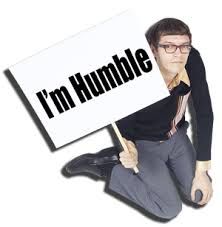 One of my pet peeves is self-centered drivers. You know the ones: they zoom down the side of the road to get up to the front of the line when everyone else is patiently merging for the construction zone, they'll speed around you on the street only to turn at the next corner, they won't use their blinker or stop fully at stop signs or even stop at all on a red light. I get irritated by people who are clearly only thinking of themselves when they are on the road.
Of course, I've realized, I'm only irritated because those people often inconvenience me.
And as I get older, I realize thatmost all of the problems I create in life I do so because I'm being selfish. I'm focused on myself and my own desires rather than thinking about others or who my actions might impact.
The final twelfth step of the downward-climbing ladder of humility according to St. Benedict is "reached when a [person] shows humility in his heart and in his appearance and actions" (RB 7.145).
One might think that humility, like meekness, is weak--that it means letting people walk all over you. This is untrue. Christ calls us to love others as we love ourselves. We can't love others unless we're taking care of our own needs.
For example, I'm learning to be better about disciplining students at school. My tendency has always been to let some things slide. I'll crack down when it's serious, but I tend to turn a blind eye before that point because I don't want students to think of me as one of those "mean" staff people. Of course by not disciplining--by not correcting improper actions--I'm only thinking of myself. I don't want them not to like me. But the action that is helpful for everyone--including the misbehaving student--is to address the issues that are occurring. Humility means knowing my place. And when I'm a parent or working at school, that means I have the responsibility to correct students' misbehavior. When someone else in authority addresses me, it is my place to listen to them.
My ego gets in the way of God's will. I still turn to it way too often, but it does me no good. So, like most things, I've got a way to go. Maybe knowing that is one of the first steps to humility. (Though Benedict would say that the first step is "taken when a man obeys all of God’s commandments–never ignoring them, and fearing God in his heart" (RB 7.131).)
Of course, I've realized, I'm only irritated because those people often inconvenience me.
And as I get older, I realize that
The final twelfth step of the downward-climbing ladder of humility according to St. Benedict is "reached when a [person] shows humility in his heart and in his appearance and actions" (RB 7.145).
One might think that humility, like meekness, is weak--that it means letting people walk all over you. This is untrue. Christ calls us to love others as we love ourselves. We can't love others unless we're taking care of our own needs.
For example, I'm learning to be better about disciplining students at school. My tendency has always been to let some things slide. I'll crack down when it's serious, but I tend to turn a blind eye before that point because I don't want students to think of me as one of those "mean" staff people. Of course by not disciplining--by not correcting improper actions--I'm only thinking of myself. I don't want them not to like me. But the action that is helpful for everyone--including the misbehaving student--is to address the issues that are occurring. Humility means knowing my place. And when I'm a parent or working at school, that means I have the responsibility to correct students' misbehavior. When someone else in authority addresses me, it is my place to listen to them.
My ego gets in the way of God's will. I still turn to it way too often, but it does me no good. So, like most things, I've got a way to go. Maybe knowing that is one of the first steps to humility. (Though Benedict would say that the first step is "taken when a man obeys all of God’s commandments–never ignoring them, and fearing God in his heart" (RB 7.131).)
11/22/2011
Subbing and Serving
I've been substitute teaching for two weeks now. It's been good to be working some again, but it's not an easy job. Older grades especially don't respect you and you just deal with a lot of hassles and issues. And maybe you get to teach. Mostly I've been subbing for paraprofessionals. It seems to be the way you get your foot in the door in larger school districts (which I have never subbed in large school districts on principle, so this is a new journey).
The paraprofessional jobs have been the most rewarding so far. They pay less (unfortunately), but they tend to give you the most interaction as you tend to spend more focused time with students. I've been in one elementary classroom a couple of times now, which was fun to return to the second time, knowing many of the kids' names when I walked in the hallway. I worked mainly with two boys whose families had come from different parts of Africa. They have some developmental issues going on and can be moody at the drop of a pin, but they're also a delight to be around. During outside recess the other day, they were mad because they couldn't play in the snow on the playground because they didn't have boots or snowpants (any kids without--and there were several who didn't come to school with them--had to just play on the sidewalk). And I have a feeling these boys might not have snowpants and boots at home--nor the available resources to get them. (If your kids outgrow their snowpants and they're still good, please see if you can pass them on to kids who can't afford them at a nearby school.)
Today I was with high schoolers and young adults (18-21) with varying developmental disabilities. I know that some of the classes are rough to be in with some, as some students have behavioral issues and outbreaks. But overall it is highly rewarding. Honestly, today was one of the happiest work settings I've been in in a long time. Most of the other staff were really courteous and friendly. And the students are fun to be around. Yes, it's work...they need to be frequently kept on task or kept from doing things they shouldn't be doing. But they are also a lot of joy. They love to affirm and be affirmed, to give high fives and laugh and joke around.
For the most part, many of these students are kids that the world would classify as "the least of these." This past Sunday our text in church was from Matthew 25, where Christ the King sits on the throne and judges the nations, separating the sheep from the goats based upon how they served "the least of these"--the hungry, naked, thirsty, imprisoned. Jesus tells the sheep that when they served, they were serving Him. The goats are told that they missed out on seeing Christ because they didn't help those who needed help.
St. Benedict tells those who lived in his monastic communities to see Christ in everyone. We are all created in God's image: the immigrant child, the mentally retarded young adult, the imprisoned drug addict, the homeless vet on the street corner.
As much as there are days when I don't want to go to a school, there are also days when being there makes it easy for me to see Jesus. For that I am thankful.
11/07/2011
A Visit to St. Ben's
 Today I went with four other people from our church (and a friend of one of them) to St. Benedict's Monastery for a Spiritual R&R Day retreat they offered to our church (as well as others). Three of us are in our mid-to-late thirties. The other two were almost twice our age. It was nice to have a mix and be able to talk with each other.
It was my first visit to a monastery. I've been wanting to go for a long time, but this was one of my first opportunities. The day was largely just an open day for spiritual renewal. We could sign up for a 10 minute healing touch neck massage (which was full) and a half hour of spiritual direction (which I did). Sister Josue gave an opening presentation on celebrating All Saints Day. Sister Eunice gave a closing prayer that was a nice end to the day. But what I looked forward to most was getting to attend prayer times with the community. The mid-day prayer was the only one we were there for, but it was a blessing. It was wonderful to hear the psalms sung and get to be part of the choir singing back to each other. My one desire for the day would have been to have had time to talk with the sisters more. There is much I would love to learn about monasticism (especially Benedictine) and to draw on their wealth of faith.
But the day did what it was designed to do--providing spiritual R&R. I hope to be able to spend more time down the road with that or other communities.
Sister Eunice shared from Matthew 11:29 in the closing prayer: "...learn from Me for I am meek and humble of heart, and you will find rest..." Amen
10/16/2011
Thoughts on Work
Tonight at church we had our three different "Re-Rooting" options to choose from. It's been a hard choice each week. All the topics are interesting. Some are offered twice, so that helps. I often choose based upon if I'm in the mood for a lecture, a discussion or an experiential option. I ended up going to the discussion on the dignity of work tonight. My good friends Pete and Peter were leading. They started with Genesis--with God creating humans in His image and giving them the mandate to fill the earth and have dominion over it. Work is part of who we are and what we created to do. Of course, after the curse of sin, the toil of work was part of the punishment. Work is a gift; toil is the curse.
They read from Ecclesiastes where the writer encourages us to eat drink and enjoy our work. They also referenced the Rule of Benedict where St. Benedict tells about the importance of work. Work is prayer, prayer is work. Everyone had a job and they needed to do it well, as if working unto God. And of course, they touched on Brother Lawrence's Practicing the Presence of God. Brother Lawrence felt that washing dishes was the most important part of his day, for it was there he connected with God. He disliked having to stop to take time out for the offices of prayer.
We didn't have much time, but good discussion followed. It's one of those topics we don't touch on very often, but we could look at for hours. There are days I fail miserably at working well, I will confess.
I believe that work is meant to be a place where we connect with God, serve others and discover ourselves. I find that I work best and get the most out of manual work. I also find that shortcuts--conveniences--take that away. Unfortunately, the conveniences are often needed for getting all the work done in a day. Loading the dishwasher gives me time to spend with the boys or my wife in the evening. Putting clothes in the dryer gives me time to clean the bathroom. Kneading bread in the Kitchen Aide lets me get soup made.
But washing dishes by hand gives me time to reflect and pray. Hanging clothes on the line gets me outside where I can pray for the neighbors. Kneading bread or pizza dough by hand is therapeutic. I think we even miss out by not having to take our rugs outside and beat them with a rug beater; I wonder if our anger levels would be more manageable if we did...Above all else, work is a place where we can meet God.
I believe work has become an issue for us in today's culture because either we're married to our job (and forsake the other parts of our lives like our family--even though we may convince ourselves that we're working for our family's sake) or we try to avoid work at all costs. Our job should be a vocation--a calling. But it is not the end nor beginning of our work. We have work at home. We have work in relationships. Marriage is work. Parenting is work. Friendships are work. Our commitment to a church is work.
Our work becomes overly burdensome because we don't Sabbath well, either. We consider going to church our Sabbath duty. We seldom rest. Not well at least. God gave us the gift of the Sabbath as a change in our week. In order to have a good discussion on the dignity of work, we also need to have a discussion about reclaiming the gift of the Sabbath.
We're in a time when having work means you've got something to be thankful for. But we've all got work to do. We can choose to do it well, honorably and with dignity--as if unto God.
They read from Ecclesiastes where the writer encourages us to eat drink and enjoy our work. They also referenced the Rule of Benedict where St. Benedict tells about the importance of work. Work is prayer, prayer is work. Everyone had a job and they needed to do it well, as if working unto God. And of course, they touched on Brother Lawrence's Practicing the Presence of God. Brother Lawrence felt that washing dishes was the most important part of his day, for it was there he connected with God. He disliked having to stop to take time out for the offices of prayer.
We didn't have much time, but good discussion followed. It's one of those topics we don't touch on very often, but we could look at for hours. There are days I fail miserably at working well, I will confess.
I believe that work is meant to be a place where we connect with God, serve others and discover ourselves. I find that I work best and get the most out of manual work. I also find that shortcuts--conveniences--take that away. Unfortunately, the conveniences are often needed for getting all the work done in a day. Loading the dishwasher gives me time to spend with the boys or my wife in the evening. Putting clothes in the dryer gives me time to clean the bathroom. Kneading bread in the Kitchen Aide lets me get soup made.
But washing dishes by hand gives me time to reflect and pray. Hanging clothes on the line gets me outside where I can pray for the neighbors. Kneading bread or pizza dough by hand is therapeutic. I think we even miss out by not having to take our rugs outside and beat them with a rug beater; I wonder if our anger levels would be more manageable if we did...Above all else, work is a place where we can meet God.
I believe work has become an issue for us in today's culture because either we're married to our job (and forsake the other parts of our lives like our family--even though we may convince ourselves that we're working for our family's sake) or we try to avoid work at all costs. Our job should be a vocation--a calling. But it is not the end nor beginning of our work. We have work at home. We have work in relationships. Marriage is work. Parenting is work. Friendships are work. Our commitment to a church is work.
Our work becomes overly burdensome because we don't Sabbath well, either. We consider going to church our Sabbath duty. We seldom rest. Not well at least. God gave us the gift of the Sabbath as a change in our week. In order to have a good discussion on the dignity of work, we also need to have a discussion about reclaiming the gift of the Sabbath.
We're in a time when having work means you've got something to be thankful for. But we've all got work to do. We can choose to do it well, honorably and with dignity--as if unto God.
9/18/2011
Lectio Divina, Spiritual Practices and Heresies
During most of the year, our church rotates between an "informal" and "formal" schedule. On formal Sundays we have a more "typical" worship experience with singing, communion and preaching. On informal Sundays we typically have more of a teaching lesson separate from the worship service (but still biblically based lest you worry about that), and our worship service we call "Jam & Bread" (as we just have singing and communion--along with the normal Psalm reading, confession, scripture reading and other liturgical elements).
Our informal Sundays this fall are focused on a "Re-Root" theme. Our church is five years old and we're taking time to remember (and teach some of the newer members) about our new monastic roots. Each informal Sunday there will be a lecture, a dialogue and an experience to choose from. The lecture was on "The Rule of Benedict," the dialogue was about "What it Means to Be a New Monastic" and the experience was on"Lectio Divina." My friend Pete was supposed to lead the Lectio Divina, but as he is homebound now in a wheel chair--at least for a few days of getting used to things--I lead the experience for him.
I'm knowledgable in Lectio Divina and have led some exercises on it before, but as with many spiritual practices, I'm more knowledgeable than I am experienced. But that's why they're called spiritual practices. They take time, coming back and doing them again and again, in order to provide space for encountering God.
Lectio Divina (meaning "Divine Reading") is an ancient form of praying the scriptures in a way that you encounter God and hear His voice (for more information, here is our church's information on Lectio Divina). It was a privilege to lead a group through tonight's Scripture reading and see the different ways God speaks to people through the same passage. And in that, hearing God speak to me as well.

In searching for a resource our denomination used to have for Lectio Divina, I came across someone's blog bashing our denomination for using Lection Divina (not that most of those within the denomination necessarily use it, but our Department of Christian Formation at one point had resources for it). The person was warning against the use of Lectio Divina because when you do the method, your repeat a specific text four or five times, typically. Apparently to him, the repition of Scripture violates Jesus' commandment: "But when ye pray, use not vain repetitions, as the heathen do: for they think that they shall be heard for their much speaking. (Matthew 6:7--I quote the King James Version as the writer of the blog did). First, I don't think reading or saying Scripture aloud more than once is "a vain repetition." Second, I don't think the "heathens" would repeat any portion of scripture anyway. Third, we don't repeat scripture in Lectio Divina to be heard by God, but rather to create space for us to hear Him.
The author was also anti-Lectio Divina because it is a "Catholic" practice. Of course, the practice predates the reformation to a time when there was only one church--albeit a "catholic" one in the "universal" sense of the word. While St. Benedict is often credited as the founder of Lectio Divina, it is well-rooted in ancient Hebrew practices of repeating and meditating on the Torah.
Too often I come across people who shun some practice of the church today because it is "pagan," "Catholic," or "unbiblical." I have heard people say practices such as lighting candles, using prayer labyrinths, playing instruments other than an organ or piano have no place in the church because they aren't mentioned in the Bible. And they may not be. But plenty isn't mentioned in the Bible that is still acceptable to these same people: sitting in pews, listening to sermons, singing anything that's not a Psalm, wearing suits and ties and Sunday dresses aren't mentioned in the Bible. But many of us cling to those actions.
Sometimes we are fearful of things we don't understand. Too often we have biases against practices our faith doesn't normally do (especially if we're "Protestant" and the practice might be "Catholic"). We don't understand that things like Lectio Divina have been used by faithful followers for well over 1500 years (in many cases two - three thousand years or more when rooted in the Jewish traditions). Too often we get tied in our own modern traditions while ignoring spiritual practices that have been around for millennia.
But we do these spiritual practices not to be "religious" or "spiritual" but to slow down and take the time to be with God, acknowledging that we desire to create space to encounter God. The ancient Hebrews knew this; the early Christians knew this. Too often we think we know better than they did. We have much to learn (for more information on these ancient practices look for the Ancient Practices series that Phyllis Tickle spearheaded).
Our informal Sundays this fall are focused on a "Re-Root" theme. Our church is five years old and we're taking time to remember (and teach some of the newer members) about our new monastic roots. Each informal Sunday there will be a lecture, a dialogue and an experience to choose from. The lecture was on "The Rule of Benedict," the dialogue was about "What it Means to Be a New Monastic" and the experience was on"Lectio Divina." My friend Pete was supposed to lead the Lectio Divina, but as he is homebound now in a wheel chair--at least for a few days of getting used to things--I lead the experience for him.
I'm knowledgable in Lectio Divina and have led some exercises on it before, but as with many spiritual practices, I'm more knowledgeable than I am experienced. But that's why they're called spiritual practices. They take time, coming back and doing them again and again, in order to provide space for encountering God.
Lectio Divina (meaning "Divine Reading") is an ancient form of praying the scriptures in a way that you encounter God and hear His voice (for more information, here is our church's information on Lectio Divina). It was a privilege to lead a group through tonight's Scripture reading and see the different ways God speaks to people through the same passage. And in that, hearing God speak to me as well.
In searching for a resource our denomination used to have for Lectio Divina, I came across someone's blog bashing our denomination for using Lection Divina (not that most of those within the denomination necessarily use it, but our Department of Christian Formation at one point had resources for it). The person was warning against the use of Lectio Divina because when you do the method, your repeat a specific text four or five times, typically. Apparently to him, the repition of Scripture violates Jesus' commandment: "But when ye pray, use not vain repetitions, as the heathen do: for they think that they shall be heard for their much speaking. (Matthew 6:7--I quote the King James Version as the writer of the blog did). First, I don't think reading or saying Scripture aloud more than once is "a vain repetition." Second, I don't think the "heathens" would repeat any portion of scripture anyway. Third, we don't repeat scripture in Lectio Divina to be heard by God, but rather to create space for us to hear Him.
The author was also anti-Lectio Divina because it is a "Catholic" practice. Of course, the practice predates the reformation to a time when there was only one church--albeit a "catholic" one in the "universal" sense of the word. While St. Benedict is often credited as the founder of Lectio Divina, it is well-rooted in ancient Hebrew practices of repeating and meditating on the Torah.
Too often I come across people who shun some practice of the church today because it is "pagan," "Catholic," or "unbiblical." I have heard people say practices such as lighting candles, using prayer labyrinths, playing instruments other than an organ or piano have no place in the church because they aren't mentioned in the Bible. And they may not be. But plenty isn't mentioned in the Bible that is still acceptable to these same people: sitting in pews, listening to sermons, singing anything that's not a Psalm, wearing suits and ties and Sunday dresses aren't mentioned in the Bible. But many of us cling to those actions.
Sometimes we are fearful of things we don't understand. Too often we have biases against practices our faith doesn't normally do (especially if we're "Protestant" and the practice might be "Catholic"). We don't understand that things like Lectio Divina have been used by faithful followers for well over 1500 years (in many cases two - three thousand years or more when rooted in the Jewish traditions). Too often we get tied in our own modern traditions while ignoring spiritual practices that have been around for millennia.
But we do these spiritual practices not to be "religious" or "spiritual" but to slow down and take the time to be with God, acknowledging that we desire to create space to encounter God. The ancient Hebrews knew this; the early Christians knew this. Too often we think we know better than they did. We have much to learn (for more information on these ancient practices look for the Ancient Practices series that Phyllis Tickle spearheaded).
9/05/2011
A Labor of Love (since it's Labor Day and all)
In the New International Version of the Bible, the phrase "love the Lord your God" occurs thirteen times. "Love your neighbor" occurs ten. Ten times we are told to love ourselves (as our guideline for loving others). The Bible tells us that these are the first and second greatest commandments: to love God and love our neighbor as we love ourselves. Scot McKnight calls this "The Jesus Creed." It is the basis of what we live out when we follow Christ.
We've had a weekend of God, self and neighbors. Friday night, as discussed in the post before this, we had over 50 people in our yard as we had a cook-out with families from the boys' school. Saturday evening we got together with our good friends from our old neighborhood and went to an outdoor concert at Lake Harriet (though we didn't expect it to be as cold as it got). Sunday we went to the farmers market, did some biking and hiking in a park, had our last church service in the park for the year and gathered around a bonfire with friends after church. This morning we gathered at another friends' house on the parkway in North Minneapolis to watch the 10k & 5k race that went in front of their place. Several members from church and a friend from school were running in it. So we camped out on the lawn and cheered them on (while sharing some breakfast food). We ate lunch together and hung out (playing a few games of kubb and molkky as well).
Our text at church on Sunday night was from Romans 13:8-9: "Let no debt remain outstanding, except the continuing debt to love one another, for he who loves his fellowman has fulfilled the law. The commandments, “Do not commit adultery,” “Do not murder,” “Do not steal,” “Do not covet,” and whatever other commandment there may be, are summed up in this one rule: “Love your neighbor as yourself.”" I've mentioned before the struggle I have at times in loving myself (as well as others and God). It's not easy. But the more we do it, the better we become.
Pastor Jan said, "In God's love, we become loving; in our loving others, we experience God's love." When we grow in one area (loving self, God or neighbor), we ultimately grow in all areas. I call the the trinity of love. All three areas need to be there. If we're neglecting one side of the love triangle (God, others, self), we're not fully loving any of the other sides. We can't fully love God if we're hating our neighbor. We're not truly loving others if we despise ourselves.
St. Benedict, in his rule of life for monastic living, said to treat the stranger (as well as the one you know) at the door as if they were Christ. Here I often fail. And sometimes I treat Christ as a stranger. And sometimes I treat myself that way, also. But there are times when I love God really well. There are times I love others really well. There are even times I love myself well. These are the times to build upon--and love from.
If I love myself well, I accept who I am. I take care of my needs. I forgive myself for my faults. This is how I should treat my neighbor. If I love God well, I am spending time with him. I am praising Him for who He is. I am doing what He asks of me. This is also how I should treat my neighbor. Inwardly, outwardly and upwardly we are called to love. Jesus (as well as Paul) says that in doing this, we fulfill all the commands of the Bible. So simple--yet so hard at times. But the more we do it, the better we become.
We've had a weekend of God, self and neighbors. Friday night, as discussed in the post before this, we had over 50 people in our yard as we had a cook-out with families from the boys' school. Saturday evening we got together with our good friends from our old neighborhood and went to an outdoor concert at Lake Harriet (though we didn't expect it to be as cold as it got). Sunday we went to the farmers market, did some biking and hiking in a park, had our last church service in the park for the year and gathered around a bonfire with friends after church. This morning we gathered at another friends' house on the parkway in North Minneapolis to watch the 10k & 5k race that went in front of their place. Several members from church and a friend from school were running in it. So we camped out on the lawn and cheered them on (while sharing some breakfast food). We ate lunch together and hung out (playing a few games of kubb and molkky as well).
Our text at church on Sunday night was from Romans 13:8-9: "Let no debt remain outstanding, except the continuing debt to love one another, for he who loves his fellowman has fulfilled the law. The commandments, “Do not commit adultery,” “Do not murder,” “Do not steal,” “Do not covet,” and whatever other commandment there may be, are summed up in this one rule: “Love your neighbor as yourself.”" I've mentioned before the struggle I have at times in loving myself (as well as others and God). It's not easy. But the more we do it, the better we become.
Pastor Jan said, "In God's love, we become loving; in our loving others, we experience God's love." When we grow in one area (loving self, God or neighbor), we ultimately grow in all areas. I call the the trinity of love. All three areas need to be there. If we're neglecting one side of the love triangle (God, others, self), we're not fully loving any of the other sides. We can't fully love God if we're hating our neighbor. We're not truly loving others if we despise ourselves.
St. Benedict, in his rule of life for monastic living, said to treat the stranger (as well as the one you know) at the door as if they were Christ. Here I often fail. And sometimes I treat Christ as a stranger. And sometimes I treat myself that way, also. But there are times when I love God really well. There are times I love others really well. There are even times I love myself well. These are the times to build upon--and love from.
If I love myself well, I accept who I am. I take care of my needs. I forgive myself for my faults. This is how I should treat my neighbor. If I love God well, I am spending time with him. I am praising Him for who He is. I am doing what He asks of me. This is also how I should treat my neighbor. Inwardly, outwardly and upwardly we are called to love. Jesus (as well as Paul) says that in doing this, we fulfill all the commands of the Bible. So simple--yet so hard at times. But the more we do it, the better we become.
8/15/2011
Discernment
Our sermons during the summer have been using the lectionary readings to look at some of the driving principles of our church. We've looked at hospitality, stability, contemplative living, obedient listening, being inetergenerational and being missional. Last night we looked at discernment using the story of Daniel interpreting Nebuchadnezzar's dream.
Pastor Jan described discernment as "the process of sacred listening that weighs and separtes what is true fromwhat is illusionary freeing us to love and serve God with our whole selves." She talked about some of the presuppositions involved with discernment.
First, we must be open to God. We can't discern God's will if we aren't open to Him.
Second, we must desire to do God's will. "God does not reveal His will to us if we don't want to do it."
Third, we must have an active knowledge of God. To discern His will, we must know Him.
Fourth, we must be (at least willing to be) free from our attachments. Attachments could be food, sex, music, solitude, new clothes, thrift stores, spirituality, exercise, entertainment, money, volunteering, politics, social issues, and so much more. If we are attached to education, for example, any discernment made about pursuing a new degree for example, would be skewed. Likewise, if we think education is a waste of time (an attachment toward anti-intellectualism) then our discerning of someone's dilemma to go to college or not would be bent. Pastor Jan noted that this is probably our biggest hurdle. We have attachments. They can get strong enough to become addictions. All are idols. These attachments keep us from fully knowing God and His will for us.
After having worked on some of those attachment issues, it's easy to feel like you're in the clear. It's also easy to let other attachments sneak in and find their way toward gaining strongholds. They require disciplined, honest examination of your life as well as a community where others know you well and you are open to having them speak to your life as well.
It's a wake up call to know I can't fully discern God's will if I'm working outside of those perameters above. I know I've missed out in the past. May the future be clearer.
Pastor Jan described discernment as "the process of sacred listening that weighs and separtes what is true fromwhat is illusionary freeing us to love and serve God with our whole selves." She talked about some of the presuppositions involved with discernment.
First, we must be open to God. We can't discern God's will if we aren't open to Him.
Second, we must desire to do God's will. "God does not reveal His will to us if we don't want to do it."
Third, we must have an active knowledge of God. To discern His will, we must know Him.
Fourth, we must be (at least willing to be) free from our attachments. Attachments could be food, sex, music, solitude, new clothes, thrift stores, spirituality, exercise, entertainment, money, volunteering, politics, social issues, and so much more. If we are attached to education, for example, any discernment made about pursuing a new degree for example, would be skewed. Likewise, if we think education is a waste of time (an attachment toward anti-intellectualism) then our discerning of someone's dilemma to go to college or not would be bent. Pastor Jan noted that this is probably our biggest hurdle. We have attachments. They can get strong enough to become addictions. All are idols. These attachments keep us from fully knowing God and His will for us.
After having worked on some of those attachment issues, it's easy to feel like you're in the clear. It's also easy to let other attachments sneak in and find their way toward gaining strongholds. They require disciplined, honest examination of your life as well as a community where others know you well and you are open to having them speak to your life as well.
It's a wake up call to know I can't fully discern God's will if I'm working outside of those perameters above. I know I've missed out in the past. May the future be clearer.
7/29/2011
Thor & St. Benedict
Our boys have been on the farm for a week with the grandparents along with their cousins. Which ended up being terrible timing because one of my cousins was in a diving accident and was in the hospital with spinal injuries. His parents were on vacation overseas at the time, so my dad was at the hospital. Which left my mother at home with six kids under age nine (and without a vehicle large enough to be bale to go anywhere with them). So I don't think their time on the farm was what they were hoping for.
But it left us with some time alone for the first time in a long time (seriously--I sadly can't remember when our last real date was). We of course had work and meetings and other things going on during this time so we didn't have a lot time together. But I took time on Tuesday to bike (11 miles!) over to Beth's work. We had some time together and went to see an afternoon matinee of Thor (yes, I know the movie was out two months ago, but haven't had time to see a movie for several months and we usually wait until they're at a cheap theater).

Thor is based on a comic book which is based on Norse mythology. Thor is the son of the king of Asgard (a "god" if you will) and in line for the throne. When the time comes, however, his father Odin finds Thor to be too prideful, arogant and full of himself. So Odin strips Thor of his powers (much of which comes from his hammer Mjolnir) and banquishes him to Midgard (earth) until he is worthy of ruling his people.
His hammer, thrown to earth, is stuck in the ground. Like Excalibur, it can only be pulled out by the one worthy of it.
Only once Thor has learned humility is he worthy of his hammer again. It takes him a while, but by learning to care for others, Thor finally gets it. He is even willing to sacrifice his life so that innocents may live.
Right after seeing the movie, we stopped at a grocery store to get som salad ingredients for having supper with friends. While my wife ran into the store, I happened to pick up Joan Chittister's book Wisdom Distilled from the Daily in the car. The chapter I had left off in was on humility as well (sometimes God seems to be none too blunt in getting His message across).
St. Benedict has a lot to say about humility. After all, if you're going to be living in community, humility goes a long way. We sometimes think of humility as a weak trait. Thor showed it isn't. Jesus did the same. Humility is knowing you're no better than anyone else (nor are you the worst). It is remembering that God is always with us--because in doing so we know where we stand. We are a sinner. We are also dearly loved. Everyone else is in the same boat.
Joan Chittister points out, "Humble people walk comfortably in every group. no one is either too beneath the or too above them for their own sense of well being." Through humility we live in reality, knowing our place in the world. And we are also free to love unconditionally, sacrificially knowing that all others deserve to be loved as much as we are.
7/17/2011
Stability
I haven't written for a while. I preached tonight at church, so my focus was on that. We're also leaving in the morning for a camping trip (the first of two this week). It's our first "vacation" with other people (other than family members). There's a handful of friends we could envision spending a week vacation with (let alone a family who would be willing to camp and go at our level of affordability for vacationing). So we're thankful for friends we don't have to feel anxious about spending several days with--and who have kids ours can spend all that time with as well. We're coming back in time to wash clothes and re-pack for a camping trip with my family next weekend.
That foundation helps us weather the storms of life. We do not need to run when the tough times come. We can stand firm, knowing that God is with us and He is steadfast.
In the midst of all the preparations, I was focusing on a sermon on stability. I talked about how stability, biblically speaking, isn't so much about "balance" in life. (My friend and former boss Joel Rude used the following imagery often, so he gets credit for the balancing analogy.) If you imagine a see-saw with the fulcrum in the center, we often imagine life that way--a balancing act. You need to have the same amount of mass on each side. If you add more mass to one side, you need to balance out the other side or shift the fulcrum closer to the side with more mass. We can talk about God being the fulcrum that we need to center our lives on, and this is all good imagery. But we all know how difficult it is to keep life balanced--especially if unexpected things come our way.
I talked about how our issue is that the fulcrum only touches one small point. If we widen it, eventually spanning the entire width, then it becomes a foundation instead of a fulcrum. And whatever gets added to our lives--whatever storms come our way--we can handle it without getting out of balance. If we claim to have God as Lord of our life, then He should be in contact with our whole life anyway--not just one small juncture.
Stability is a central part of St. Benedict's Rule. When a new monk is formally admitted into the community, he takes vows. "When he is to be received, he comes before the whole community in the oratory and promises stability, fidelity to monastic life, and obedience" (RB 58:17). Stability is rooted in place (the monastery--for us, our church and neighborhood), obedience to God and community (intentionally inviting our faith community into our lives). Our foundation is strengthened when we practice our faith disciplines: following the rhythms of the church (liturgical calendar), praying the hours, investing in our small groups (chapter houses in our church), etc.
That foundation helps us weather the storms of life. We do not need to run when the tough times come. We can stand firm, knowing that God is with us and He is steadfast.
And so, in the midst of a hectic week, we can have stability. And it'll be nice to take part of our community with us on vacation.
12/29/2010
Congress, The Constitution & God's Word
I heard on NPR today that when Congress opens on January 6, 2011, they will begin the session with a full reading of the Constitution. Granted, the Republicans are doing it to show up the Democrats whom they feel ignored the Constitution when they were in control. Whatever the motives, it's not a bad idea. Actually, it's a great idea. Shouldn't those who make the laws be well versed in the law? It's incredible that in our nation's history, congress has never read the entire Constitution.
This probably isn't a bad way to start the new year in our churches as well. Not reading the Constitution, of course, but reading the Law and all of God's Word upon which we base our daily living (or at least should be). Not that we have the time read the entire Bible in one setting, but I wonder how many Christians have read through the entire Bible. I wonder how many churches have read through the majority of the Bible throughout even years of existence.
One of the things I'm grateful for as we read The Divine Hours together as a family is that we hear from most sections of the Bible together as a family. I also appreciate following the lectionary at church for the same reason. Of course, whether or not your church follows the lectionary, we all have the ability to read through the entire Bible. Investing in only a few minutes each day takes us through the entire Scripture. If we claim to follow Jesus, we can't do so without knowing His Words (New Testament) and the words He lived by (Old Testament). If you're one to make resolutions, how about starting with something that will shape your life in tremendous ways?
11/16/2010
One of Those Days
We're having one of those days. I say "we" because I'm pretty sure my wife and I are on the same page, even though we're not in the same place today. Actually, we've had a lot of those days together. They're the days we often don't talk about with others--when someone asks how you're doing, you're still likely to say "fine" or "good," even though it's a lie. And there are points on some of those days where I'm "fine" one moment and not another. Still, I'm not going to gloss over my day today. It's not fine.
It started yesterday with Beth feeling certain that she didn't get the job she had recently interviewed for. It's been almost two and a half years of her trying to get into her field. It's discouraging. And I don't always know how to respond. Sometimes she doesn't want to be encouraged; sometimes she wants to give up. Often I feel inept as a husband. And today she found out that she was scheduled to work from 11 to 5:30 on Thanksgiving Day (at Starbucks, which she enjoys working at, but it's not where she desires to be--nor can we live on the wages), so we don't really get to do a meal together that day. And sometimes, it's just tough be inside all day with 3-4 kids (as much as I love them all).
To be further honest, the Bible isn't always a place of comfort for this--especially in waiting for God's perfect timing. Sarah and Abraham had to wait until they were older than most people live to be to conceive a child. Joseph was in prison for years before being remembered. There are four hundred and some years of waiting between Malachi and Matthew--the Old and New Testaments. It's not always comforting.
One of our church's core principles is reading the Divine Hours twice a day (at least). The Divine Hours are Phyllis Tickle's compilation and adaption of a manual for fixed hour prayer--a modern version of what St. Benedict requested of monastic communities 1500 years ago. One of the things I appreciate about it, is that it's very Psalm-focused. And the Psalms don't gloss over the emotions of being human. I venture to say that there are more of them that share feelings of anger, depression, sadness, loneliness and hopelessness as there are "happy" psalms.
I don't often know how to pray when I'm having "one of those days." I don't have to--others have prayed for me, and the Spirit mediates my groans. Sometimes it's comforting just to know that those prayers of anguish and lamentation are in the Bible. That God can handle what we're feeling, and that other pillars of faith have been in the same boat. It doesn't take away the fact that we want this time to pass, but it's okay to have one of those days.
8/20/2010
Watching My Tongue
As my kids are getting older, I'm realizing more and more how I need to watch my mouth. Not because I use obscene language or anything in appropriate around them, but because I need to be more intentional in the words I use.
Anders frequently catches me when I tell him, "Just one second," and it takes more than one second. Sure, I use it as a figure of speech meaning give me a short amount of time to finish what I'm doing, but my son needs me to say what I mean.
I've been reading through Joan Chittister's The Rule of St. Benedict: Insight for the Ages lately. St. Benedict talks often about being intentional in what we say, and not saying it too readily or saying too much (in fact, he chastened monastics to not speak unless asked a question).
My lesson (as an introvert who doesn't have a problem in saying too much) is to speak with intent and with blessing. Saying "Have a good day," "See you later," or "How are you?" have little meaning. So, I'm asking myself, "What if I got rid of those meaningless phrases and said things that matter?"
"May you discover the blessings of this day."
"Our visit was a blessing for me; I hope we can do it again soon."
"What has God been teaching you today?"
It's really a shift in thinking. Or maybe just thinking instead of reacting, instead of saying what we say out of habit. So I know I won't get there right away. But I'm thinking about it. And I have a six-year old who will remind me when I have said something I don't actually mean.
Anders frequently catches me when I tell him, "Just one second," and it takes more than one second. Sure, I use it as a figure of speech meaning give me a short amount of time to finish what I'm doing, but my son needs me to say what I mean.
I've been reading through Joan Chittister's The Rule of St. Benedict: Insight for the Ages lately. St. Benedict talks often about being intentional in what we say, and not saying it too readily or saying too much (in fact, he chastened monastics to not speak unless asked a question).
My lesson (as an introvert who doesn't have a problem in saying too much) is to speak with intent and with blessing. Saying "Have a good day," "See you later," or "How are you?" have little meaning. So, I'm asking myself, "What if I got rid of those meaningless phrases and said things that matter?"
"May you discover the blessings of this day."
"Our visit was a blessing for me; I hope we can do it again soon."
"What has God been teaching you today?"
It's really a shift in thinking. Or maybe just thinking instead of reacting, instead of saying what we say out of habit. So I know I won't get there right away. But I'm thinking about it. And I have a six-year old who will remind me when I have said something I don't actually mean.
Subscribe to:
Posts (Atom)